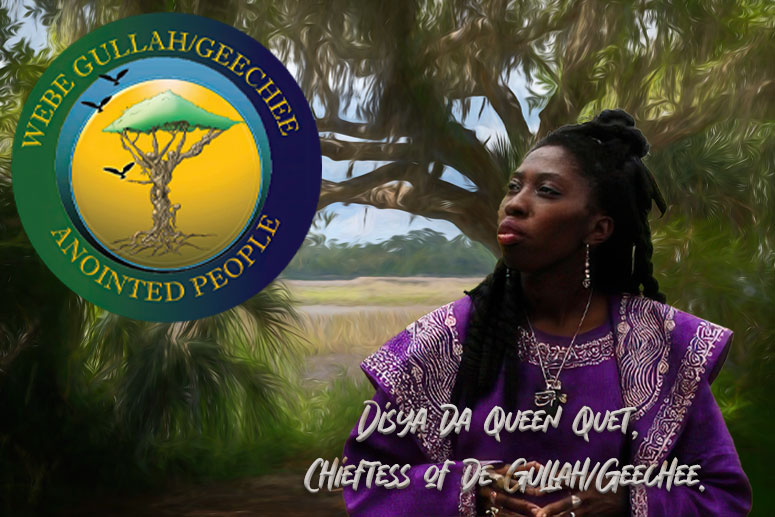
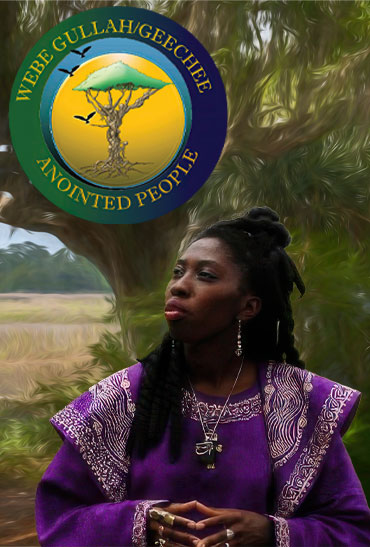
Episode 30, the Talking South Carolina Podcast Interview with Queen Quet, Chieftess of the Gullah/Geechee Nation
Subscribe to Podcast:
 Apple Podcasts
 Spotify
 iHeartRadio
 Amazon Music
 CastBox
 PocketCasts
 RSS
RSSContact Info:
- Tel: Call Queen Quet
- Email: Queen Quet
- Website: Queen Quet
- Social Tag: @GullahGeechee
Queen Quet:
Angela Barrett – “Well, thank you so much for being with me today. It is such an honor.”
Queen Quet – Glad if they would honor Neil.
Angela Barrett – “Yeah, I was going to say I probably should have told you. If you’re going to talk, real deep. What I call the the Gullah Geechee. I am probably not going to be able to understand you, which is terrible.”
Queen Quet – “The look. Yeah. And then just like a bunch of people would then sounds I a like, if you don’t even know all of what we the correct me to say. So I mean if on anything like that it. But I just want you to know, I can’t speak your language as well as I can help you up.”
Angela Barrett – “Well, that is one of my questions. I, well, first give you a story, and then I’ll tell you the question. I’ll give you the question. So my second grade kindergarten teacher loved to, speak Geechee. She would read all of our stories. And so the more that you hear it, the more you can understand it. But when you haven’t heard it in a long time.”
Angela Barrett – “And I remember trying to write, she would read Bir rabbit Berber. Okay. And that and I loved it. Absolutely loved it. But so now my question is, how do you learn to understand? Read it. Is there an organization, a place you can go to do that?”
Queen Quet – “Well, first of all, let’s let’s cover this far, okay? Gullah is the language itself, which is what you heard me speaking. Geechee is essentially a pigeon or a dialect of the Gullah language. So that’s why people who speak English and American English in particular, because that’s different all over the world to Englishes. Sure. You may start to feel like you understand it if people speak around, but more often not know if they are fluent in Gullah, that’s not going to just happen.”
Queen Quet – “And so whether it’s Gullah or Geechee, it’s largely oral. So therefore you don’t find a lot of it in writing unless there’s some academic or usually some non-cognitive person. There’s the they had a hold on it that tried to describe it in a negative way. So speakers could try to access it. But what I found over the years is a lot of that stuff is wrong.”
Queen Quet – “It’s written incorrectly because that’s not how we would say. And we can immediately figure out that, oh, we know whoever wrote this was in Gullah, right? And so so we say, yeah, yeah, because we would have said this or this with this word here doesn’t even exist. Just because they exist in English. So that’s been a thing. But now a lot of what we see, because I know we’re practicing now.”
Queen Quet – “Right. I’m posting on social media the way to try to connect to a lot of native Gullah Geechee, to a lot of them. The younger generations speak Geechee. They don’t speak Gullah because that’s the word they’ve grown up to in. It’s really integrated, and they are more exposed to English most of the time. So it may make more sense if we just put things out there.”
Queen Quet – “So there’s no school. There’s no one organization doing that. There’s no quote unquote standardized way for anybody. Right? There is still an oral language. And so definitely it’s something we take pride in have, and it’s always fun to hear people say to us, they relate to us. Like you mentioned that story and whistling and going, what?”
Angela Barrett – Yeah.
Queen Quet – “So let’s have that. Let me see what you looking at that. Well, read it in the whole intonations and inflections. Everything changes energy.”
Angela Barrett – “Yeah, yeah. And I don’t know, the book certainly wasn’t written that way. It was just the way she was.”
Queen Quet – Read it.
Angela Barrett – “To us. Yeah. Yeah, it was great. So tell us first. The Gullah Geechee Nation. Tell us about that, because that’s different than the the Gullah. UGC Island coalition, which.”
Queen Quet – “Absolutely. So, yeah, let me tell you. So the delegate to the Island coalition is older than the Gullah Geechee Nation. The Gullah Geechee Coalition actually will be 30 years old next year. They go to see how people listen. I found and it was the first organization, world history to have the word go out and get together in anything.”
Queen Quet – So you went to do any research you would have never found Gullah or something to put a dash. It was never meant to be a dash. Yeah. So this minute I don’t have anything I that barbecue sign to some degree. So I was using the internet before everybody one myself. Next to the government as the government at first.
Queen Quet – “And so they started releasing it so that the general public could use it. I was an early user. So one of the things I wanted to do was to find out what was on this thing. What is this thing? You know, castanets. That my thing, right? I’m Gullah Geechee. So what’s the internet? What are we going to disconnect from?”
Queen Quet – “I wondered, had they caught any ghost stuff? Had they caught any geeky stuff and I had to put those words in separately, like we would say, into the search engine? You’d have if you put those nothing you put, but you’ve got maybe one page you put in gets you, you, you got two case and that was it versus now you could be there for more fun if you put those words separately.”
Queen Quet – “And so the galaxy Owl mission was a vision that because there was so much this place of native languages have happened from the CIA between Jacksonville, North Carolina and Jacksonville, Florida. So so I said, well, I got to do something about this. So I talked to elders that brought together the conference on my home island and Saint Helena Island, two stories.”
Queen Quet – “And they it was amazing because they got people from Florida and North Carolina and South Carolina and then working in zoom. And I’m thinking, I need to introduce these elders. And they’re working and going, They’re doing what I wanted to do. And I’m like, wait a minute, they know each other. And they looked and they largely had known each other from the civil rights movement and, yeah.”
Queen Quet – “And hadn’t seen each other since that time frame. And now we’re into the early 90s. So now I’m saying, well, wait a minute, we need to teach everybody that because now there’s that much more pressure to hold onto our culture, hold on to our land. They were like, oh my God, do that. And you go for the organization and we’ll just support what you’re doing.”
Queen Quet – “And I’m looking like, well, I wanted you all to be part of. Me y’all my elders, right? So I went on and established a delegate to Sea Island Coalition. And interestingly enough, Angela, I got more people across the United States and the world that got so excited about this organization and something that was going to help them learn about what that is.”
Queen Quet – “One of them had heard about we had a language and they didn’t really understand it. Like you mentioned, or someone read them something, they were like, where’d you get it from? And they’re like, I gotta be somewhere in South Carolina. They were like, where does this come from? So now every day of my life since I founded the organization, I get online and I post things to educate people about our culture.”
Queen Quet – “So one of the things they continued was the land displacement. So educating people that we don’t have the land, we won’t have the culture as our stuff for the land. And we and we did land and family and what were the big bloodline and things like that. And so with the waters being our bloodline and this land being our family, we have to say you don’t want it destroyed.”
Queen Quet – “And so that led to me being invited to the United Nations and that connection going to the United Nations is where I started being taught by the International Human Rights Association for American Minorities about human rights law. I didn’t know also, there were all these elders that now we’re trying to figure out a way to bring all these Gullah Geechee people together to hold on to their land and to continue to teach their cultural heritage to the children.”
Queen Quet – “And here, I mean, who is that? The College of Charleston, she contacted me and me, Doctor Yusef and God bless dad, who is a law professor but a native of South Carolina. All right. Right now there’s Canada. And they’re saying with what you’re doing with the U.N., you do realize you all have your human right to self-determination. You can stand on that.”
Queen Quet – “So the Cali Town Gullah Geechee People Foundation led a petition and a follow up that took place for one whole year from 1999, the first time I went to the United Nations and made world history again as the first delegates to ever speak before the Human Rights Commission in Geneva, Switzerland. They were quoting as I was heading over there, and they had this will go on all the way until July 2nd, 2000, when I was still then elected as a head for body delegate nation.”
Queen Quet – “So I’m the official head of state for the delegates, making the first person to do that. So the nation is our own nation, like the United States is a nation, but in the nation we have numerous organizations. So going to Seattle and Coalition now, be it that it’s older than the nation, it actually is an organization in the nation, just like the Golgotha Angel necklace, the Gullah Geechee Cultural Community Trust that’s down in Florida.”
Queen Quet – “There are plethora of them. And so even pensando that happened is a nonprofit. It’s an organization, although it’s a historic site. So there are a lot of organizations in the nation. But the Gulf nation is amazing. And I’m the head of state. We have a Wisdom Circle Council of Elders, which is kind of my cabinet, and I call it my right hand.”
Queen Quet – “And they have an Assembly of Representatives. That’s why I left that. And I always say this, they can you if you want to try to think of it in the US, you might say, oh, they’re like the Congress. But I always say, but they behave better.”
Angela Barrett – “I love it. Absolutely. Let’s back this up for one second. Less what? I’m gonna let you explain the difference. And and where Gullah came from and where Geechee, I mean, because they are two different things, as you said. Tell everybody what it is. I know, other than a language who speaks it where it’s from and and from both of those.”
Queen Quet – “Yes. So a lot of times when people are coming down here and saying, like I did, it sounds like it now and again, if people like this show that a first time, they say, what a right, and we say it’s Gullah and they’re like, then what is that? Well, Gullah, like you said, is not only a language, it’s the people and the people who speak that language.”
Queen Quet – “And that language came into existence because of the enslavement of numerous African ethnic groups during chattel enslavement. So, yeah, yeah, it can come a link it usually by go like guys maybe, maybe numerous others who they brought together. They amalgamated their languages into what is now known as the Gullah language. And you got the word Gullah because at first, the Africans that were being kidnaped and brought to the region that we call the Lowcountry and the delegation nation were from Angola.”
Queen Quet – “So when they were sold at auctions, their name got bastardized into Gullah. It just got cut off. You know, our Southerners will cut it off and give you a nickname and all that. So they cut off Angola and would say, we have a cargo Gullah for sale. That word started being used over here because of that. And then when they started realizing that those folks were always in the uprisings, somehow they were always engaged.”
Queen Quet – “They said, oh, now we’re going to ban the importation of those, and they start shipping in another group whose name was Gullah Golla from the Windward Coast Rice coastal region, which is why in this area we are so connected and Gullah is so connected to rice, because that was the rice growing region. So in that region where the kids, the people or the GZ people, which is where the G.G. comes from.”
Queen Quet – “So when I heard those uprisings, when you think about 1739 and the Stonewall rebellion happened just down here on the coast between John’s Island and then going over to what’s now Hollywood Ravenel, where there was a store called the Hutchison Store right there. And there’s a marker a South Carolina state marker exists right now, hopefully now about this rebellion, this uprising.”
Queen Quet – “Right. And people call it Cato’s rebellion. Cato’s uprising. Those were Angolan leaders. A man at that, renamed Jimmy was Cato. And when he laid these men to leave John’s Island with our motto votes and roll across the highway 17, which was called the King’s Highway there. And they broke in that store. They got guns and armaments, and they’ve already made swords and things, and they were blacksmiths and they were blown up.”
Queen Quet – “Some of them ended up down a grassy yard. There’s Santa Teresa de Marseilles or Fort Mill, say, all the way in Florida. So got killed along the way. Some didn’t make it, but the result of the action became the slave roads that got that said, no black people were to read or write, no black people to own land, no black people were to play the drums or any of that.”
Queen Quet – “The Africans. Right. And no three or more Africans were to gather together without an overseer present. An overseer had to be a Anglo person, a white person. So if we’re not writing legally from 1740 until the end of the Civil War, it’s not legal for black people to read and write. Then when you start to write something like gold, it changes from gold la to g u la h over here.”
Queen Quet – “If you were to write guides, you don’t write g dci, you don’t write x e, you write g, g, g, e, c, h, e, and look, you’re on until the end. And no, I get for the week. Okay, that’s oh right. With the I know as a person there are no I’s in the spelling of G2 either. So you end up with people who are gullible or geeky people, or gullible people.”
Queen Quet – “And the reason that God showed me that when I founded the Golden Coalition and I wrote anything, promoted anything, put the words together, is because social anthropologist had divided it. So we needed to show our unity. So as computer scientists, that this land is something we work with as a mathematician, that that looks like a minus sign. Too much have been taken away from us already.”
Queen Quet – “So I knew don’t use a dead that use the slash because of the unified delegates. But now that handles the social media, I just I don’t need to slash it anyway. Right? So that’s how the origin of those came to be. But it goes fast and geeky. All the people. And then Gullah by self is a language, and kitchen by itself is a dialect of pidgin of the Gullah language.”
Angela Barrett – “Well, thank you for that because, it is and it can be, I tried reading as much as I could, but it you can get very bogged down in it because it goes back so far. Yeah. The history is like us. I’m confused now. I have to do this again another day and read it again, because it goes back a long way, a.”
Queen Quet – “Long way, and on a long distance in terms of miles. Because when we talk about between Jacksonville, North Carolina, Jacksonville, Florida, and then all the city and in 30, 35 miles in to the mainland to the Saint Johns River, you have a massive barrier that things have been written out yourself from the 15, 16, 17, 1800 up to today.”
Queen Quet – “So like you said, yeah, you can be there all day and it doesn’t and for a lifetime and still learn more. And then it doesn’t help that these guys many times teach creative writing things where we have like Port Royal as a town and it sits on Fort Royal and we have Beaufort, South Carolina, and we got Beaufort, North Carolina.”
Queen Quet – That smell smells just right.
Angela Barrett – That’s absolutely.
Queen Quet – So that kind of doesn’t help sometimes when you’re trying to read the historical documents.
Angela Barrett – “That’s right, that’s right. So now, the you have a 25th anniversary coming up, some of the Gullah nation, right?”
Queen Quet – Yes. That’s correct.
Angela Barrett – Yes. So there are going to be y’all are going to have some big events. Tell us about that and what’s coming up.
Queen Quet – “Well, actually we already kicked it off.”
Angela Barrett – Oh did you. Good.
Queen Quet – “The open Black History Month on February 1st. We got everybody to come on down to Saint Helena Island to our reconstruction area, National Historical Park. So we will in the building, which is part of the historic and National Landmark story district. And we had people come from all over the place. We had people from all 40 states we’ve been talking about, and a lot of people, of course, in South Carolina.”
Queen Quet – “So we had a number of counties represented, and we had had a create art showcase. And so people had African American calligraphy artists like Marine Debris and turned into artwork. And so that’s the first case of where I have no, no one is going to be in Conway. 1st February 22nd March 2019. We’ll be in North Charleston, will actually be at the North Charleston Library.”
Queen Quet – “And so so I’m looking forward to seeing what the audience is. A lot like that because so many, many people loved art. All right. And so that’s up on in and of itself. So but yeah, we have a number of other fun things to do. So I’m a self-taught I love maybe you know I sing and so we could not do this without a celebration of Gullah Geechee art and artistry.”
Queen Quet – “Absolutely. Yeah. So for the first time, we’re going to go to Myrtle Beach to a black owned theater called Astor Theater, and we’ll be there the first weekend of April with a Gullah Geechee growing folk getaway, we call it, for the whole weekend. And that.”
Angela Barrett – That that sounds like fun.
Queen Quet – “It’s going to be fun. And that Saturday, from 11 to 2, we’re going to be at the Ashley Theater with Celebration Party for Sweetgrass Quilting. My mom and I so, so close to my hand, and there’s going to be a lot of music, so you got to have some soul. You’re going to have to have the Palm Beach thing on some of the markers, and you’re going to have some on and the for the fun of it band.”
Queen Quet – “And so fun you can Gullah. We have, Brittany Frazier out of Bluffton. She’s going to be there with Gullah Geechee food. We have Fried Daddy out of Charleston. He’s going to Elijah food. So all that’s going to go on so you can look at like a brunch, lunch, celebration. And then that’s going to be a big kind of keystone go, vine version.”
Queen Quet – “And then that evening at seven will be the Motown show. So people will have time between the two shows to kind of go outdoors. A lot of things go refresh themselves, relax at the hotel, and then come on back. And then the other big thing we do every year is going to Nation Appreciation Week. So we will launch it the last Saturday, July at Historic Center at noon.”
Queen Quet – “And then we usually say advertise noon to three. We have been able to get them people out of there at 3:00, okay. Because everybody’s they’re having so much fun. It it’s Gullah Geechee family the weekend that happens every week and it launches go to Nation Appreciation Week, which goes through to the last Sunday. And we have had on down the coast that that week, every, every I mean it’s just in person.”
Queen Quet – “So so we have have people events folks who want to keep up. They can get nation.com. There’s going to be email down there and then it always get up. And then if there’s social media people like I said on Instagram and contact still for a minute, as have I think that we’re going each nation on TikTok and we’re going each nation on Facebook.”
Queen Quet – And so they follow the with all the other events that happen at all in between. So we can all have a good time.
Angela Barrett – “Oh yeah. That does sound like a lot of fun. Absolutely. Now, if people would be more involved and, or get involved, how do they do that?”
Queen Quet – “I would love for them to become members of the election coalition. And like I said in the beginning, you do not have to be a native Gullah Geechee. You can just be someone who loves this culture, wants to see it thrive, who wants to see the cultural heritage continue if they go to yeah, they you’re on there and then become a member of that way you are involved with all kinds of activities when we’re doing these marine debris cleanups, we’re having just fun, and then we’re having a lot of educational sessions as well.”
Queen Quet – “You get that information before other people even do, and we’re always posting to you to get engaged and really be a part of all the civic work that we do as well. There’s a lot of environmental meetings we hold every year. We have our coastal cultural conference every year, he on Saint Helena, and this year we’re even going over to.”
Queen Quet – And so I live in LA. So there’s a lot of things that the members participating and they’re all over the world. We have members throughout the nation and supporters that all over the world. And that’s been the case for 29 years that we’re coming up on now.
Angela Barrett – “You’ve written several books. Let’s talk about those. You’ve got the, African seeds in In Winds in the wind. Tell me about that.”
Queen Quet – “So it was interesting. The first book that I ever published was a book, but it came about because first of all, I did plays and I did a play called a Get to Your Desk, and it was about the Underground Railroad, but how it all started in South and then people. Right. And it never just started in Canada or in the north.”
Queen Quet – “It started here. So we would educate people about the culture, and part of it was drama, and the other part was a lecture. So people would come to this and I brought it to pence. And this Heritage Day one time sold out the show, full House, Cedric Baptist Church. And so love them for like they love this video.”
Queen Quet – “But people asked why do you a history book from you and I was so other people’s history books, but they were like, this is not your book, I need a book from you. Right? So I was like, okay, but I’m also a poet. So my brother and I put together a book called Brother and Sister Heart to Heart.”
Queen Quet – “So the first year that I did this play at Penn Center, I had a line of people that wanted to leave the church for all my power because order was book. But this is a book, and I would write a poem based on their name right there, and then sign in my brother’s sign and take them so people on the line would see them say, oh, let me show you me.”
Queen Quet – “Hey, they I love this book. Book. I was like, all right, so you don’t want to buy this book now, but that book. But what a hits looking book, right? Okay. That’ll take a little longer. Right.”
Angela Barrett – Write.
Queen Quet – “So so I was like, okay, God is really pushing me. Go ahead and write my story books. I said, that’s history because I published writing articles. So it was like, okay, great, let’s do the book. So of course, my mother said, Charity begins at home and then goes abroad. So the first in this series, Africa is in winter.”
Queen Quet – “The diaspora is asking us so, so each year it’s about history. So one tells you about Saint Helena Island to God, that’s Baba and we. It’s about you for county. And so then we go into cotton rice indigo from we sold to the soil. And then I did a compilation of things called three 6566. So you could learn a little bit of history every day of the year.”
Queen Quet – “And I have Charleston, and Alex tells you about Boston County, and then also have, for place, which is telling me about the four operated areas throughout the nation. And then I thought we be Gullah Geechee, the legacy of people, land, and so forth. But that series of books tells you the perspective on the history here in the nation.”
Queen Quet – “So I have another blog of that series coming out this year, and then I have three children’s books that are already out as well. Oh, neat. Oh well, yeah.”
Angela Barrett – “Yeah. Well, that’s a good place to start. I mean, kind of like my question, how do you learn? Not necessarily the language, but I mean the whole history because you sort of gotten it broken down where you don’t go online and go, holy moly. That’s okay. It can be overwhelming.”
Queen Quet – Yes.
Angela Barrett – “Yeah. So that’s a good place to start. Or you’re the African seeds in the winds, series. That’s a great place to start.”
Queen Quet – “And most people do start there or with the legacy of evil Land. So people are really, really intrigued by the linguistics. Then they’ll get like, see, we volunteer because we do have a section. Well, we have Gullah in the pages. But then in the little margin area on the side, we have facades up and so people love us.”
Queen Quet – “But then my latest book, which is Daily Blessing Fun to See, the children’s book that I thought was for children, for more fun for themselves and for the kids. They love it because I wrote the whole thing and Gullah Geechee the whole thing. And so just like, like, novels that I came up with in 2020, I wrote and and so people love getting it.”
Queen Quet – “And I’ve learned that a lot on the new generation. A younger generation is it’s more accessible for them, because maybe the elders who spoke the language fluently have passed on a worthy to tell them and to teach them, you know, so they didn’t learn it at home the way I did. Like it is something you have to learn to live.”
Queen Quet – “Maybe you have to be there, speaking it, learning it, being a part of it. Similar to how when you were in school and you had those stories read to you, it made you remember that.”
Angela Barrett – Oh yes. Absolutely.
Queen Quet – “Like, yeah. And treasure it and sweat. If nobody does it, then you lose.”
Angela Barrett – “It. That’s right, that’s right. Well, that is fascinating. I think I could probably talk about this all day. Again, it brings just back what you said. Those childhood memories. Second grade. So much. And so when I found out that you had agreed to come on, I was like, yay.”
Queen Quet – “Yay! I said yay! That’s like a line out, like, oh, I want to talk about South Carolina.”
Angela Barrett – “Absolutely, absolutely. Well, thank you so much for being with me today. And, I look forward to, keeping up with all the social media platforms that you guys have and, and your website, which is what I’m looking at now, which is where I found all the books and the very lengthy, awards and acclamations and everything that you have.”
Angela Barrett – “Y’all just have to go on yourself and see. It’s it’s a lot. She’s done a lot. And, I am honored that you’re here today.”
Queen Quet – “I’m honored to be here, especially during Black History Month. This is really a treasured time for me, and I appreciate being able to make history by talking, yes, black in the day.”
Angela Barrett – “And so go tell them. Yeah. Okay. Well, thank you so much.”
Queen Quet – Thank you.